

An Explorer’s Orangery with Henry Agg
An Explorer’s Orangery with Henry Agg

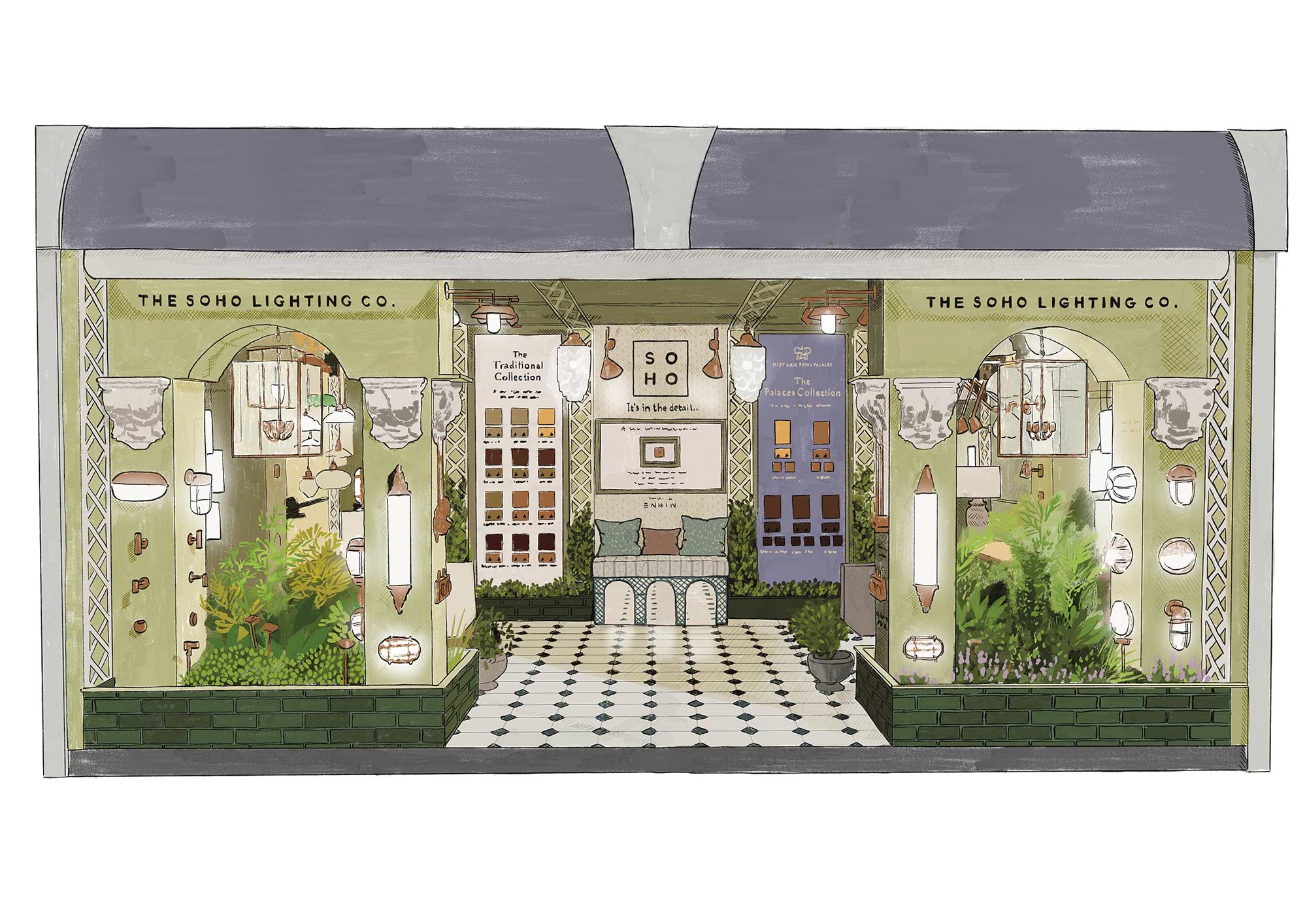
At this year’s RHS Chelsea Flower Show, our stand is conceived as an immersive Victorian‑inspired orangery, a place of discovery, atmosphere and quiet drama. Drawing on our ongoing partnership with Historic Royal Palaces, the design reimagines the spirit of 19th‑century glasshouses and palm courts, spaces shaped by curiosity, exploration and a reverence for the natural world.
To bring this vision to life, we are delighted to collaborate with Henry Agg, one of the most exciting emerging garden designers of his generation. Known for his thoughtful, naturalistic approach to planting, Henry has created a scheme that feels both evocative and rooted in history, an environment where lighting, architecture and planting beautifully co-exist.
A Victorian Palm Court Reimagined
Inspired by The Palm House at the Royal Botanic Gardens, Kew, the stand evokes a tropical orangery where lush planting rises around delicate latticework and layered views unfold gradually. Rather than presenting a single focal point, Henry’s design encourages exploration, revealing shifting perspectives, hidden details and moments of calm as visitors move through the space.
Palms play a central role, lending height, rhythm and a sense of grandeur, while underplanting introduces texture, depth and softness. The planting is intentionally immersive, blurring the boundary between structure and nature and echoing the romantic abundance of historic glasshouses.
Planting with Purpose
Henry’s approach balances visual impact with longevity and adaptability. Planting has been designed to feel alive and evolving, responding to light and shadow throughout the day, a natural counterpart to our own lighting philosophy.
Crucially, the scheme is not about botanical excess, but considered restraint. Each plant has a role to play: framing views, softening architectural lines, or drawing the eye upward to soaring palms and ornamental detailing. Even as planting ebbs and flows, the structure of the garden remains compelling, echoing Henry’s belief that gardens should be beautiful in all seasons.