


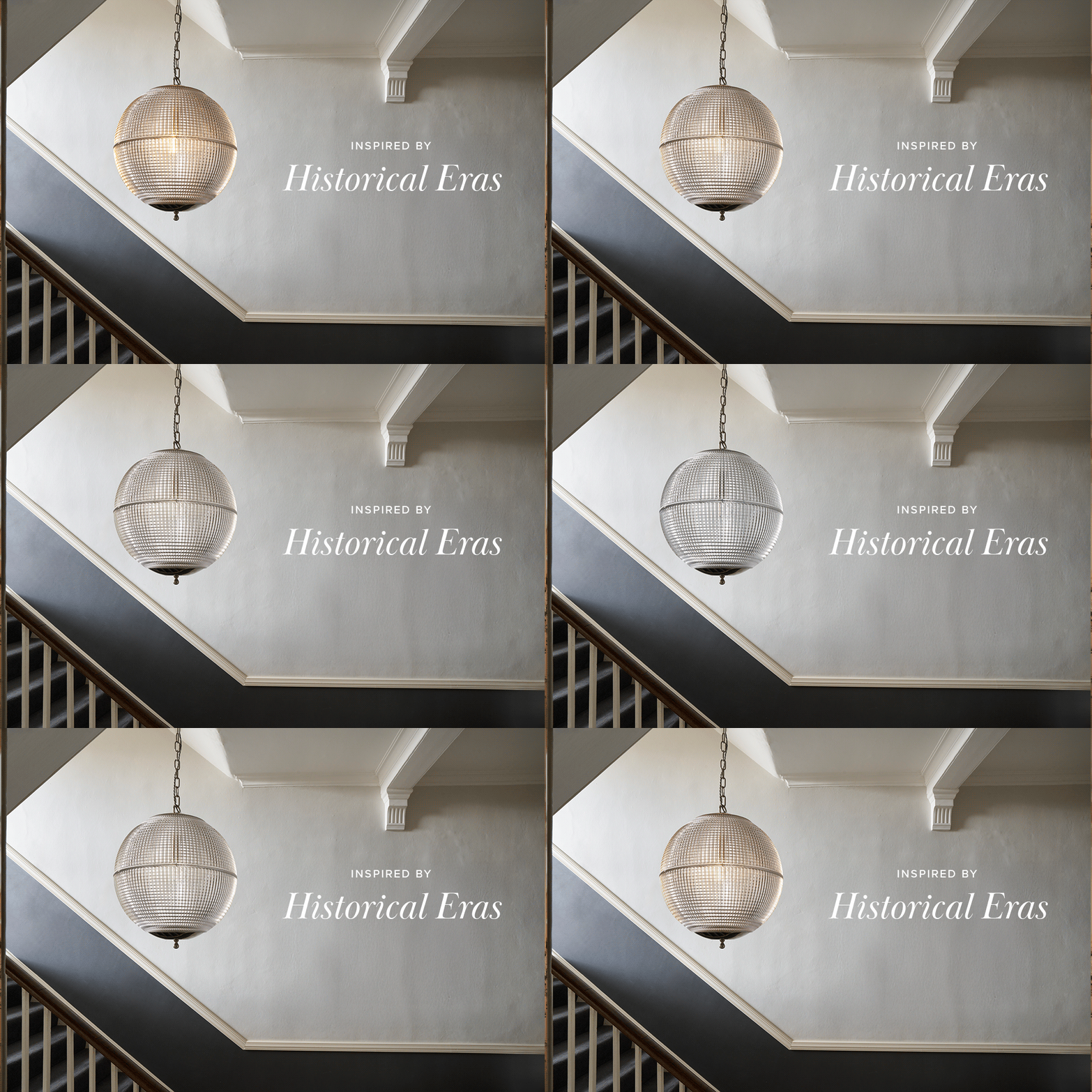
Soho Lighting was born from a simple frustration: the absence of switches and sockets that truly respected the character of period homes. Rooted in a deep appreciation for architectural history and interior design, our work is guided by the belief that the past offers the clearest direction for the present. When restoring a home, understanding its origins allows every detail to sit in quiet harmony with its surroundings.
Our lighting, switches and sockets are designed with this in mind - informed by historical forms and crafted for contemporary living.

Georgian
(1714–1837)
- Lighting was soft and atmospheric, created through candles and early oil lamps held in elegant metal sconces and chandeliers. This was a world of craftsmanship and candlelit ambience, long before electricity reshaped the evening mood.
- Interiors were defined by symmetry, proportion, and classical influence, with restrained yet refined detailing. Look out for neoclassical motifs such as fluted columns, urns and swags, alongside finely worked brass and gilt finishes. Colour palettes tended towards muted, sophisticated tones - soft creams, pale greys, sage greens and dusty blues - designed to complement natural light.
- Architectural features such as tall sash windows, decorative cornicing and panelled walls enhanced the sense of balance and order, while lighting pieces themselves were often delicate, considered and beautifully crafted, favouring elegance over excess.
- BROWSE GEORGIAN INSPIRED LIGHTING >
Victorian
(1837–1901)
- The arrival of gas lighting transformed homes and streets. Victorian ceilings often featured ornate gas chandeliers, while walls carried gas sconces with visible pipework and mantles that glowed with a warm, flickering light.
- Interiors embraced richness and decoration, with a taste for opulence and intricate detail. Look out for heavily embellished forms, including scrollwork, floral motifs and cut or etched glass shades, often paired with polished brass, bronze or darkened metal finishes. Colour palettes became deeper and more saturated - think burgundy, forest green, navy and rich gold creating a sense of warmth and intimacy.
- Architectural features such as high ceilings, elaborate ceiling roses, cornicing and wood panelling provided an ornate backdrop, while lighting pieces themselves were designed to be both functional and highly decorative, celebrating the craftsmanship and innovation of the industrial age.
- BROWSE VICTORIAN INSPIRED LIGHTING >

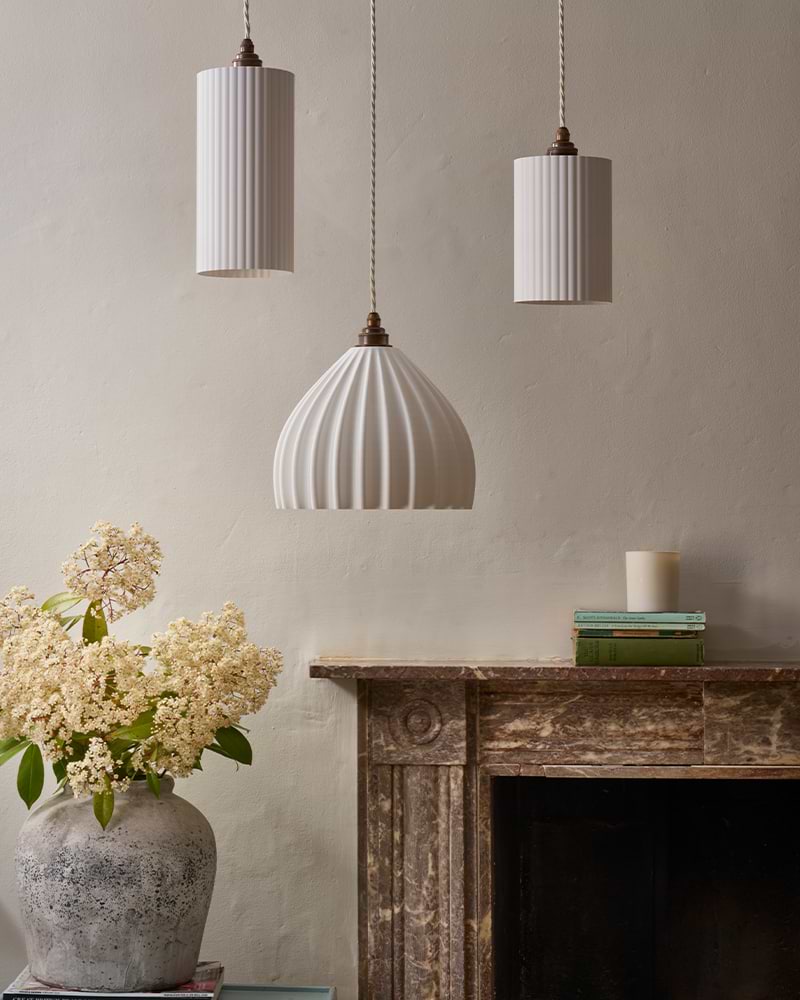
Art Deco
(1910s–1930s)
- Lighting stepped boldly into modernity with geometric shapes, symmetry, chrome, glass and streamlined glamour. Fixtures became sculptural statements - sleek, luxurious and unmistakably modern.
- Interiors celebrated contrast and precision, drawing on bold geometry and refined ornament. Look out for stepped forms, zigzags, sunburst motifs and strong linear patterns, often combined with polished chrome, nickel or black lacquered finishes. Glass was a defining feature, from frosted and etched shades to opal globes, designed to diffuse light with a soft, even glow. Colour palettes balanced neutrals with striking accents - black, white and cream offset by jewel tones or metallics.
- Architectural details such as mirrored surfaces, inlaid floors and clean, angular lines enhanced the sense of sophistication, while lighting pieces themselves embodied a confident elegance, merging function with a sense of forward-looking style.
- BROWSE ART DECO INSPIRED LIGHTING >